
We've crossed the Rubicon.
Whether it’s photography, painting, graphic design, movie, or music, art that once was a breath from an individual human’s soul will instead become something of a new outfit you just purchased at the mall. Metaphorically, it’s like picking out the shoes, socks, pants, belt, shirt, tie, jacket, and a dapper fedora, then claiming that you created the entire drip (choosing the fabric, color, patterns, measurements, cutting, and stitching the whole thing together).
Remember that SPAM Mom used to tell you was “meat”? Mmm.
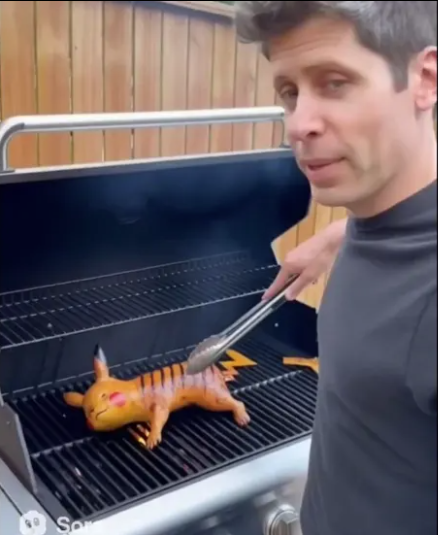
The wise adage “just because you can doesn’t mean you should” describes AI creation. I will refer to it this way even though the world knows it as generative AI. Not to be confused with AI Assist. To be clear, I'm not criticizing the use of AI in tasks that can assist the creator. I support meaningful tasks that can be accomplished to assist creatives to allow them to focus on the creative part (e.g., helping organize and find loops and samples, removing unwanted noise in audio, or even helping me regenerate a voice in an interview where the audio has dropped out in the recording, as a few examples). But when it is CREATING FOR YOU, it takes on a completely different and decidedly dark shape.
Let’s first focus on AI creation. Now that AI training has been underway on a litany of art created by humans (by you, by me), from programmed tentacles scraping the internet’s unsuspecting cracks and crevices to find and exploit victims of their large language models, it’s now become the new and legal way to steal. Everyone can instantly become a so-called “artist” without actually doing any real creating.
Meanwhile, the thieves are prospering at the expense of real human creators. Whether it’s Suno, Udio, Deepseek, Midjourney, Chat GPT, Grok, Gemini, or similar platforms, prompt-jockeys call THEMSELVES the ‘artist.’ I have a different and much more accurate term for them that I’ll share in a moment.
Now let’s zero in specifically on musical art, since that is where I empathize. The SLOP JOCKEYS aren’t picking up a guitar, playing keys, writing lyrics, singing, composing, or creating a 'fire' beat or melody.
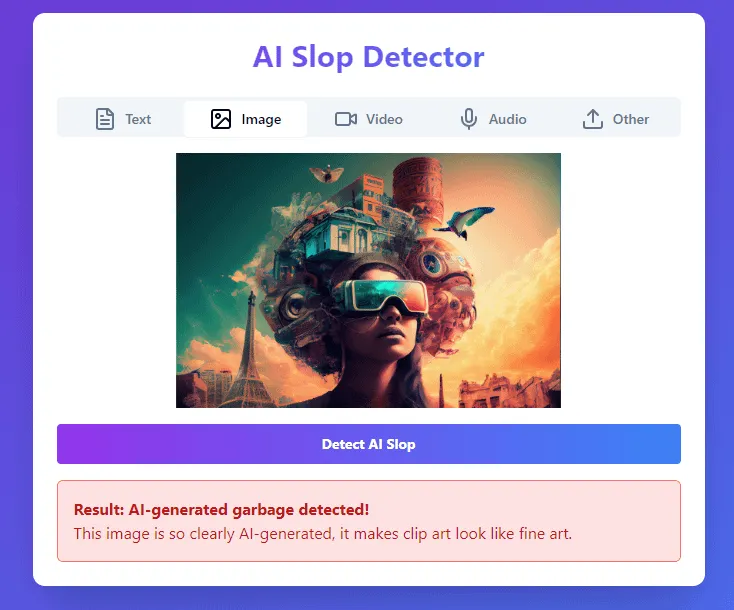
What you get when the human soul is removed from art is, in reality, a soulless, emotionless charlatan: Enter AI Slop. A phrase coined by Gen Z.
When it's just code spinning away to emulate something alive, how could that ever feel real?
We can liken this AI takeover to an alien force slowly and unexpectedly taking over the human race in the Jack Finney story “Bodysnatchers.” Artificial intelligence cannot emulate true emotion. It does not have the capacity to feel anything: no pain, sorrow, suffering, joy, hope, or longing. For me personally, my cognitive, spiritual, and physical health have found music creation to work better than any medication prescribed by a doctor.
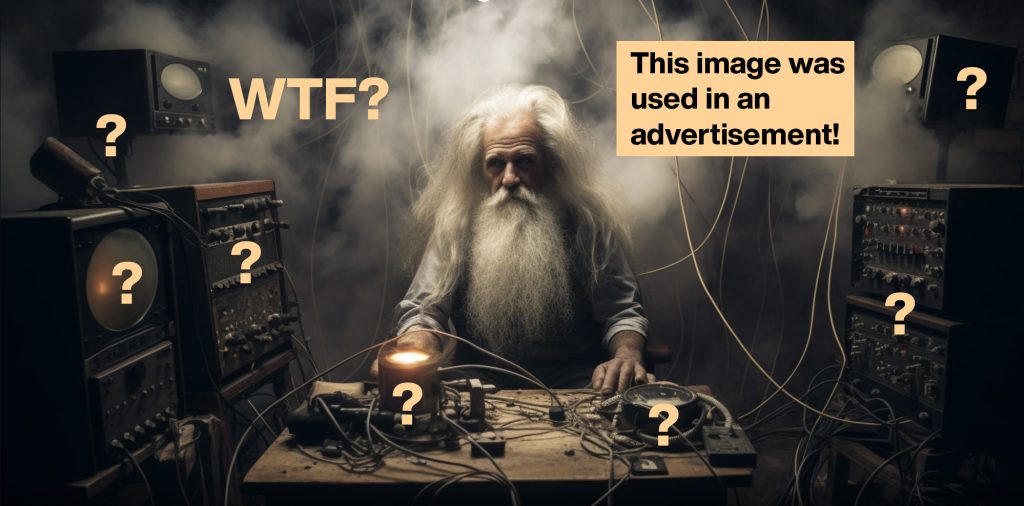
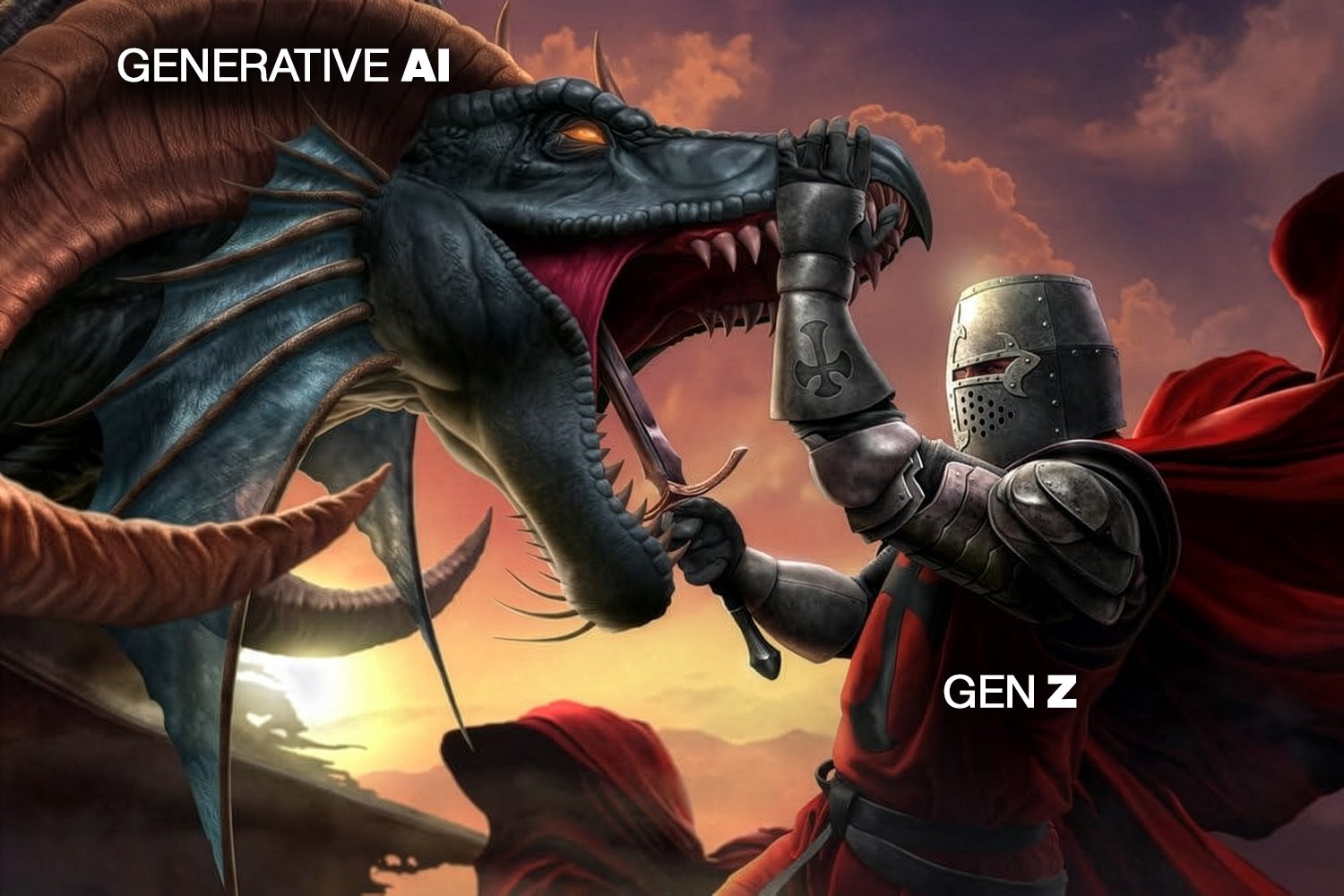
While it is entertaining to watch talking apes do comedy sketches or other parody forms of art not to be taken seriously, the floodgates are open for deepfakes designed to deceive, or like in the image above: validate the laziness and lack of care in communicating one's message. My boomer aunt posts AI generated shorts to her Facebook page nearly every day that she believes are real. The same is with music creation. AI's ability to write “hit” songs, imagining up a band of tailor-made, impossibly perfect, and meticulously crafted human personas that aren’t real, falls in the same category. It's fraudulent—a deliberate counterfeit. If it wasn’t, then why all the pretending? What’s the purpose of the fakery? Listen carefully: Where is the feeling in the words, the melody, and the musical movements that take you on a journey from verse to chorus to bridge and finale? When it’s just code spinning away to emulate something alive, how could that ever feel real? It can’t. It’s impossible. Remember that SPAM Mom used to tell you was “meat”? Mmm.
There has been a litany of arguments posed to justify the use of AI creation, suggesting it’s simply the next step in human evolution. This argument misses the point entirely—that the labor in the creation, the struggle to hone one’s craft and learn, the trial and error, polishing the rough stone to perfection – it’s all part of the experience that brings joy and raw emotion to the creator of the art. THAT is what projects out of the painting or the song and into the heart of the receiver. When creative processes are omitted, so is the joy… the sorrow… the pain… the shared experience… the LIFE.
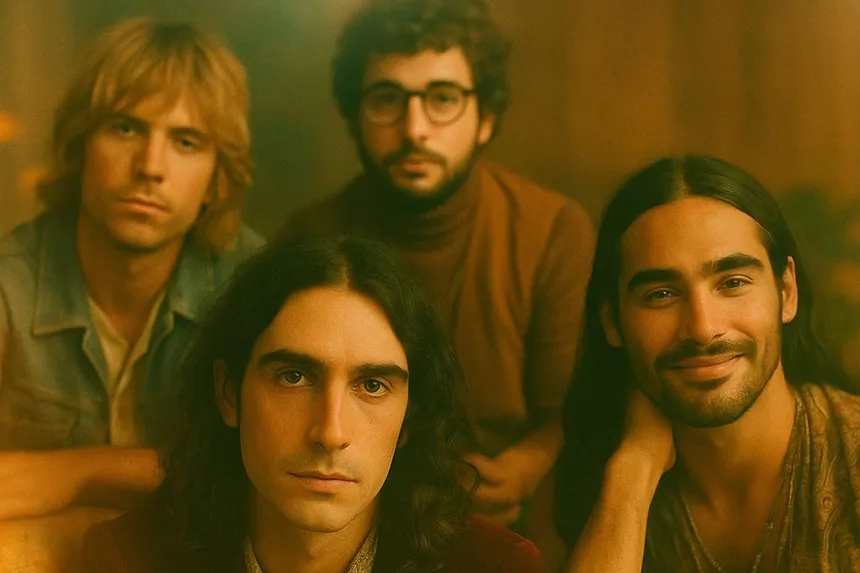
Talented and dedicated souls will break through the slop, eclipsing anything the machines splice together from our human fragments.
Enter Gen Z. This is the most outspoken demographic voicing disappointment with the human overlords that have pushed a fake world upon them. They are the generation that is reaching back to the past, discovering a time when things were real and art was created by the human soul. Take vinyl, for instance. Gen Z has embraced analog-produced music after having endured the utter sonic destruction of it: in much of today’s music, dynamics, warmth, and feeling have been removed, replaced with perfectly timed and perfectly pitched tunes that leave a us with a cold, digital donut to be choked down. In short, AI is only killing Gen Z’s already cynical vibe of the world.
As artificial intelligence proliferates around our global society, will laws be passed to restrain it and focus its use only on what humans cannot do alone (e.g., curing cancer and other diseases, helping us find better sources of energy, assisting with travel destinations, etc.).
Never mind, of course, the realities of governments, corporations, and despots misusing AI. Weapons will likely see the largest dose of AI’s attention for measures, countermeasures, and lethality. This is not only a sad and unfortunate reality of living in a fallen world, but it’s a frightening one. And we have no control of the outcome.
But let’s get back to the topic at hand. When humans are deprived of all the feelings and emotions that come from real, human-created art, there will be a longing to return to what is real. We will flock to interactive and real human experiences. Talented and dedicated souls will break through the slop, eclipsing anything the machines will inhumanely cherry-pick and splice together from our human fragments. Again, Gen Z seems to be keenly aware of the importance of real, human-created art.
In a nutshell, the group that used AI gravitated toward an echo chamber moderated by AI, not by their own brains.
Earlier in 2025, MIT split volunteer participants into three groups to complete tasks such as writing essays: one used LLMs, one used common search engines, and one was designated a “brain only group.”
Researchers found that the LLM group had an easier time writing their essays, though this “came at a cognitive cost, diminishing users’ inclination to critically evaluate the LLM’s output or ‘opinions,’” stated the paper. In a nutshell, the group that used AI gravitated toward an echo chamber moderated by AI, not by their own brains.
Additionally, participants in the brain-only group reported “higher satisfaction” with their essays and “demonstrated higher brain connectivity” than the others. In other words, there is a cost to cognitive and emotional freedom (and I would also argue a spiritual cost). AI becomes the master, leaving the user a slave to it, contrary to its design, ironically.
Putting in the work offers a dopamine hit that only human accomplishment can provide. In other words, human effort (the fail/learn/succeed struggle) leads to a reward that is felt cognitively and spiritually within the human body and soul that cannot be brought about by any other means.
While AI-generated ‘art’ will continue to proliferate all aspects of societies, it won’t take long before humans will recognize the disconnect. We will yearn for art that injects the soul with power, emotion, feeling, and empathy. Happy mistakes and all.
Only the will the machines act as they should – a refiner’s fire to not only propel human-created art to the forefront again, but also to help it thrive. My belief (and my hope) is that Gen Z will be at the forefront of this countercultural force to put AI in its place, where the human soul reigns supreme in creative arts. As it should. As it was intended.

0 Comments